Converting · Master roll to finished width
Precision slitting, measured on the finished roll.
A tolerance is only worth quoting if the roll that arrives actually holds it. Width, core, diameter, winding and splice count are written into the order before the slitter runs, and checked after.
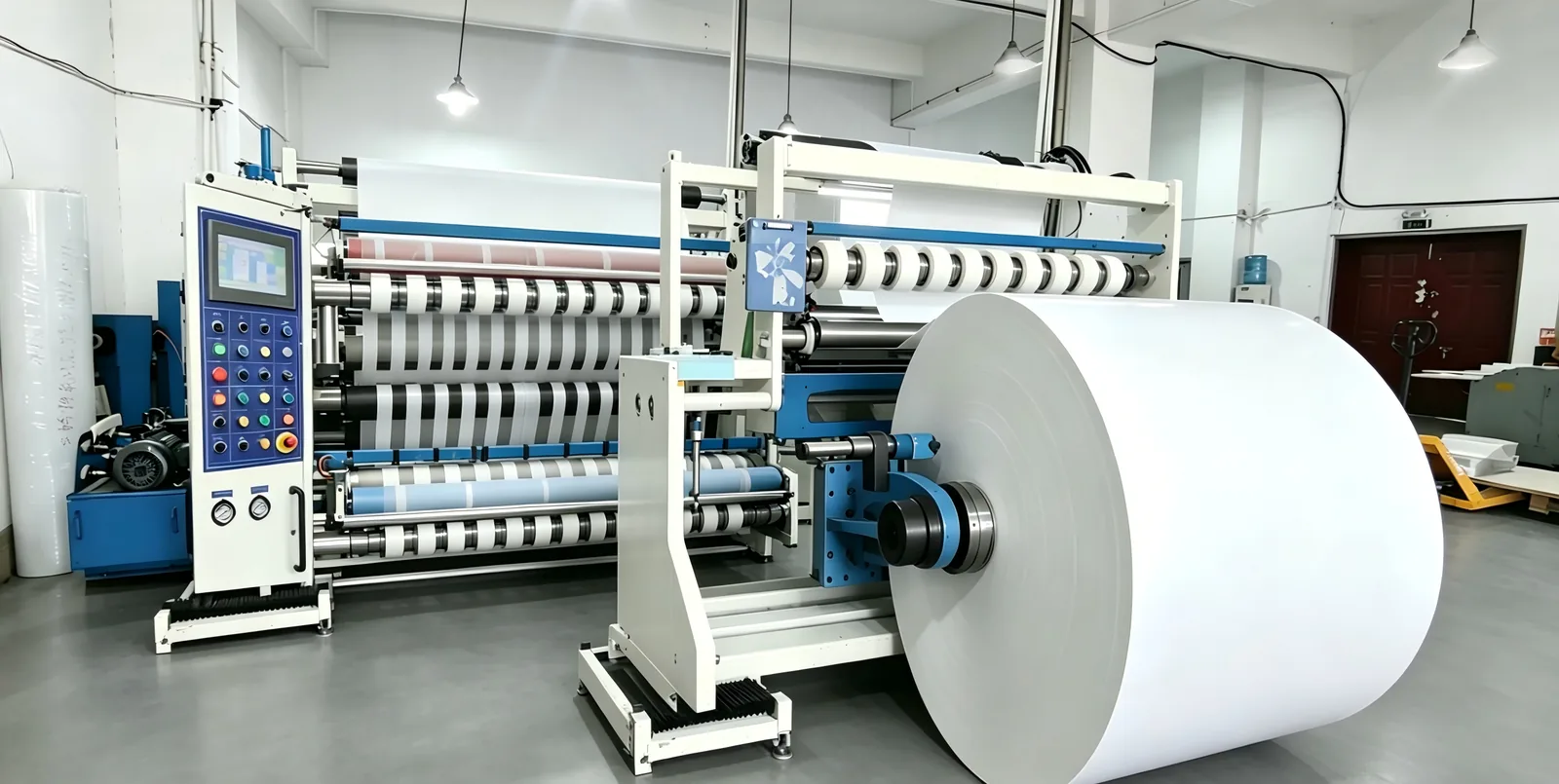
01 / Parameters
What a converting order actually contains.
Rows marked as confirmed per order are not missing data — they are the variables that change with grade, width and your equipment. We set them with you at quotation rather than publishing a number that only fits one material.
| Master roll width | 1530 mm / 1595 mm* |
|---|---|
| Finished slit width | Minimum width confirmed per material and core |
| Slitting tolerance | ±0.1 mm target* |
| Core inner diameter | Confirmed per order |
| Maximum outer diameter | Confirmed per material and equipment |
| Winding direction | Inward or outward, as specified |
| Splices | Counted and flagged per roll |
| Roll protection | Film wrap and edge protection, confirmed per order |
| Packing | Pallet or FCL container loading |
| Documentation | Width, length, core and grade recorded per roll |
*Final tolerance and available widths are confirmed against material, equipment and order specification.

02 / Why a tolerance is a target
±0.1 mm is what we aim at, not what we promise blindly.
Width accuracy depends on the material as much as the machine. A stiff film and a soft coated paper behave differently at the knife, and a liner that stretches will not hold the same figure as one that does not.
What we control: knife set-up, tension, web guidance, core alignment and roll hardness. What the material dictates: how much it relaxes after winding. So the quoted tolerance is stated per grade — and if a grade cannot hold it, we say that before you order, not after.
03 / From specification to shipment
Four steps, no silent assumptions.
Specification review
Face stock, adhesive, liner, width, core, diameter and printing method are checked against each other.
Structure confirmation
We name the grade we will supply and flag any point where your requirement and the material disagree.
Quotation or sample
A price, a lead time, or a trial roll for your press — whichever the order needs first.
Convert and record
The order is slit to the confirmed figures and the parameters are kept for the repeat run.

04 / Export packing
The roll that survives the container is the one that gets reordered.
Rolls are wrapped and palletised so the edge and the face stay intact through loading, sea freight and unloading. Pallet pattern, stacking limit and container loading plan are confirmed with the order, against the destination and the handling at your end.